Global
 Go Beyond.
Proven to be the world's best practice
Effective Teaching and Learning Practices of Top-Performing Nations
Global Go Beyond.Proven to be the world's best practice
Effective Teaching and Learning Practices of Top-Performing Nations
PR1ME Mathematics teaches via problem solving through the systematic development of problem sets; and by focusing on both aspects of problem solving - the method and the process.
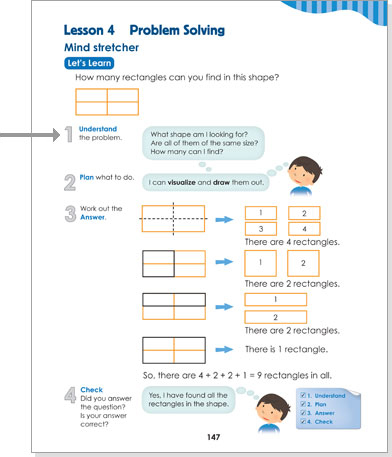
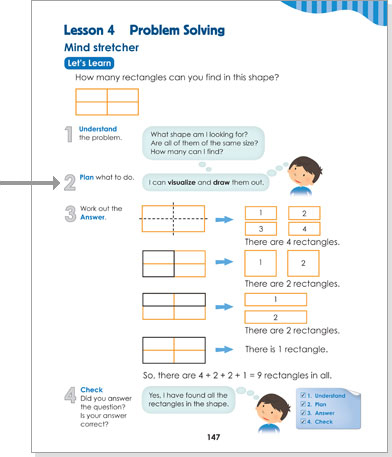
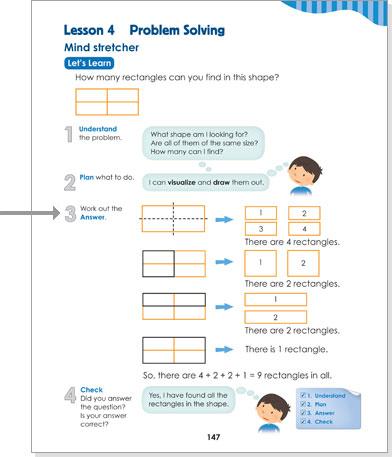
PR1ME Mathematics explicitly teaches an efficient 4-step UPAC problem solving process. This process builds good habits for approaching mathematical problems of all levels of difficulty.
Understand the problem
Plan what to do
- Draw a picture
- Make a list
- Choose an operation
- Guess and check
- Look for a pattern
- Make suppositions
- Act it out
- Work backwards
- Solve part of the problem
Work out the Answer
Check
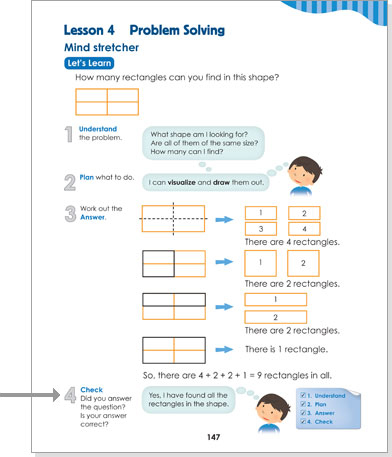

PR1ME Mathematics explicitly teaches different problem solving strategies and how to select, express, categorize and compare these strategies.
 Draw a Picture
 Make a List
 Choose an Operation
 Guess and Check
 Look for a Pattern
 Make a Supposition
 Act it Out
 Work Backwards
 Solve Part of the Problem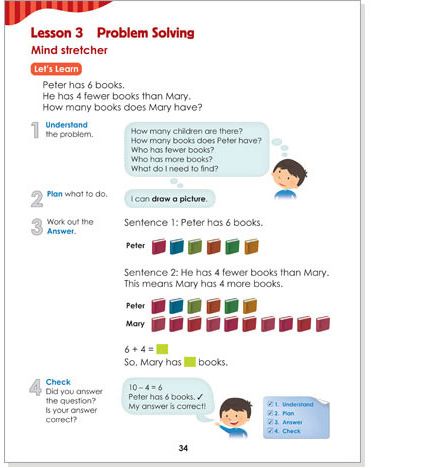

Draw a Picture
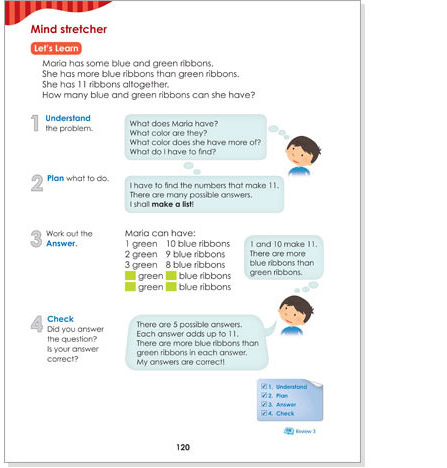
Make a List
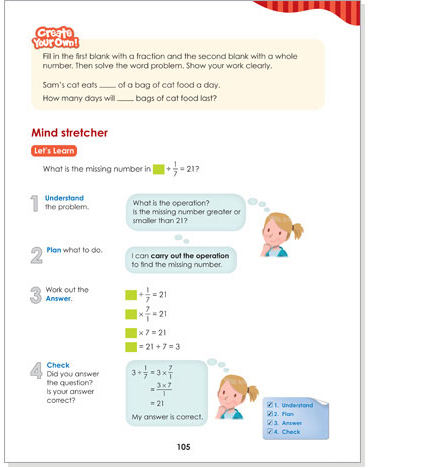
Choose an Operation
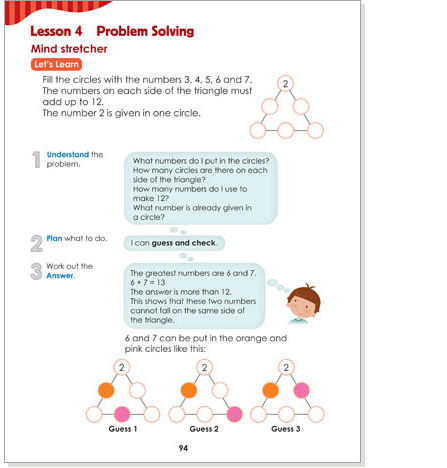
Guess and Check
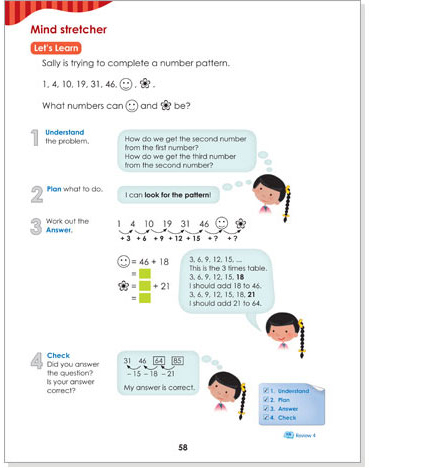
Look for a Pattern
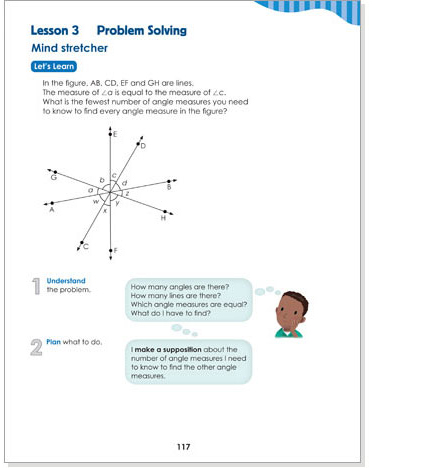
Make Suppositions
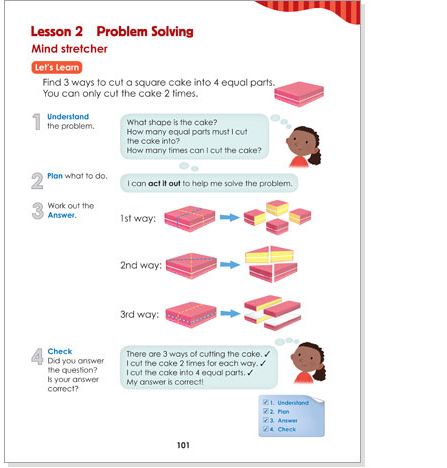
Act it Out
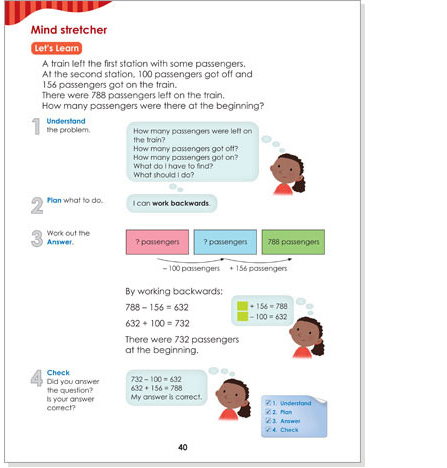
Work Backwards
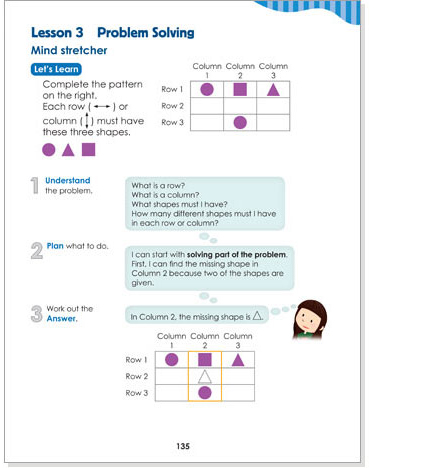
Solve Part of the Problem
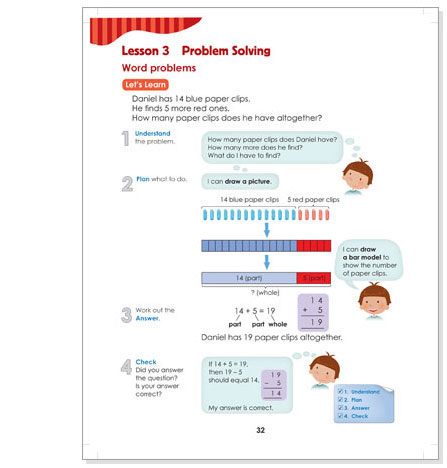
The Bar Model Method is one of the most powerful strategies for mathematical problem solving. It allows students to solve complex word problems using visual representation.
The Part-Whole Model enables students to understand the concept of addition (given the parts, find the whole).
The Comparison Model enables students to compare two quantities and shows the difference in quantities.
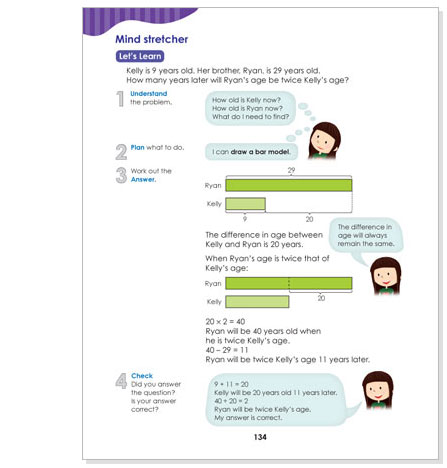
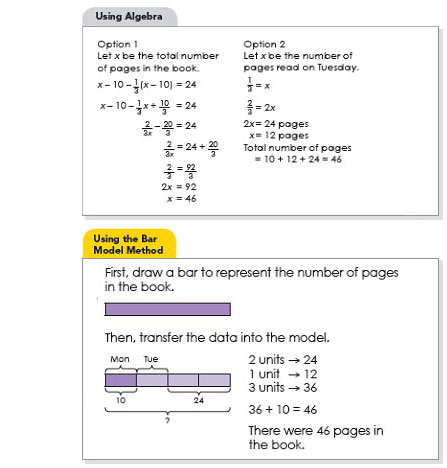
The Bar Model Method enables the students to think conceptually, allowing them to do algebraic thinking without having to do algebra.
Example:
Pearl read 10 pages of a book on Monday. She read 1/3 of the remainder on Tuesday. If she still had 24 pages to read, how many pages were in the book?
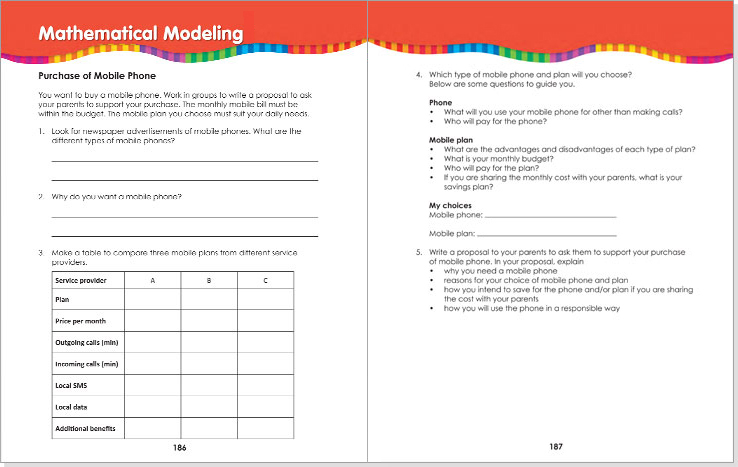
Students progress through different types of problem sets including word problems, non-routine problems, problem posing tasks and mathematical modeling.
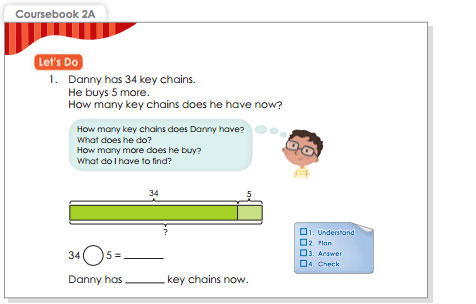
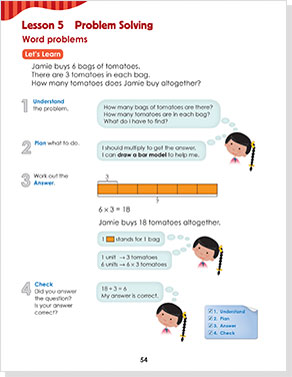
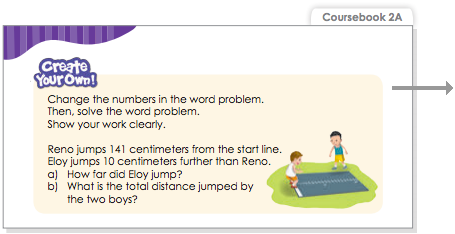
Allow students to model solutions on real-world problem situations using various mathematical methods and tools.
Encourage collaborative learning.
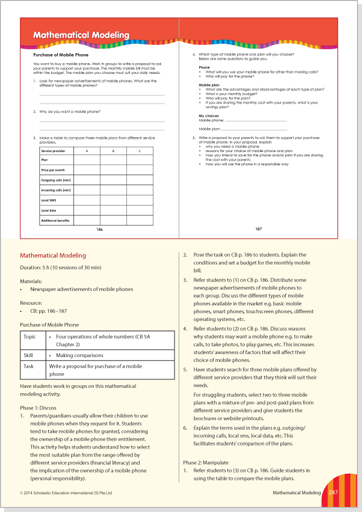
Teacher notes provide a task facilitation structure and help teachers scaffold the learning experience for students.
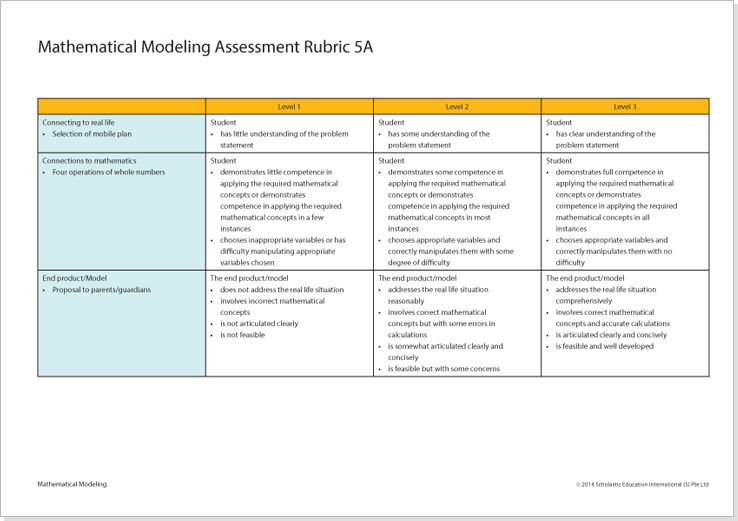
Rubrics help teachers to assess student performance